Aglaonema 'Amazon Silver'
Tuft
4AGASBU19

In the winter months, the number of sunlight hours per day continues to decrease. For many plants, this means they don't get enough light to grow, but fortunately there are plenty of plants that can stand some shade. From the Aglaonema to the ZZ plant; in this blog we tell you all about plants that can appreciate a darker location.
All plants basically need light to grow and there is almost no plant that will survive in a spot without any light. Those plants that are fine in a shade spot will probably grow better in a place with more light. In certain rooms or during certain seasons, however, it can be difficult to provide plants with a bright location. Plants that thrive in a darker spot or partial shade can then be a solution. By a dark or shady spot, we mean a place in a room where little daylight enters, for example because there is only a small window. It is also often quite dark near a north-facing window, or several metres away from an east-facing window.
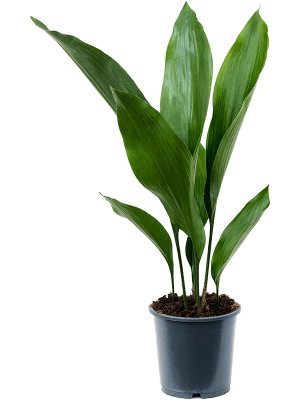
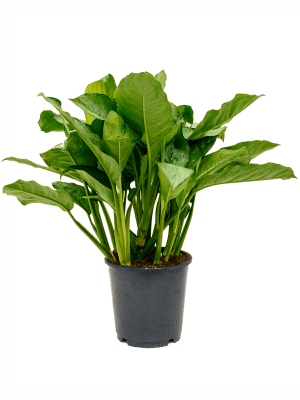
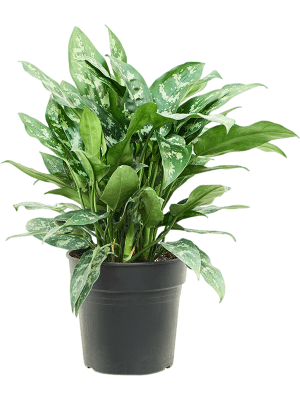
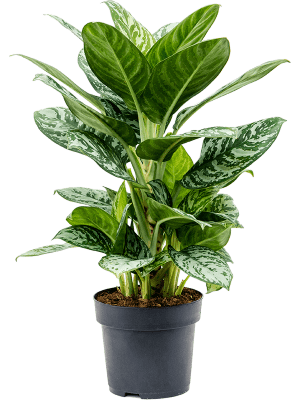
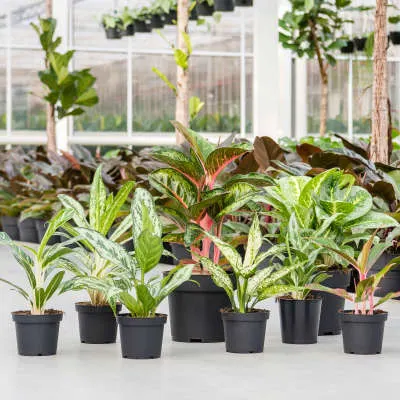
The Aglaonema is a plant recognisable mainly by its large leaves that grow almost straight out of the ground. Because the plant barely has a stem, it stays quite low; it will not grow taller than one metre. In its original habitat, in the jungles of Southeast Asia, the Aglaonema grows under the leaves of larger trees and plants. As a result, the plant has become accustomed to shade and does well in a dark place. However, Aglaonema will grow best when it does get a few hours of sunshine a day. When determining the location, it is also important to take into account the different types of Aglaonema. The varieties with mainly green and white leaves, such as 'Freedman' and 'Key Lime', can stand a darker spot better than the colourful varieties 'Jungle Red' or 'Crete'. Whether the plant is happy with its location is easy to tell from its leaves. Yellow leaves are a sign of too much light and drooping leaves are a sign of too little light.
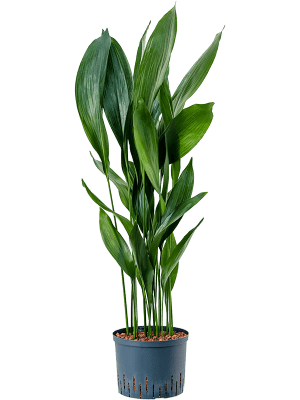
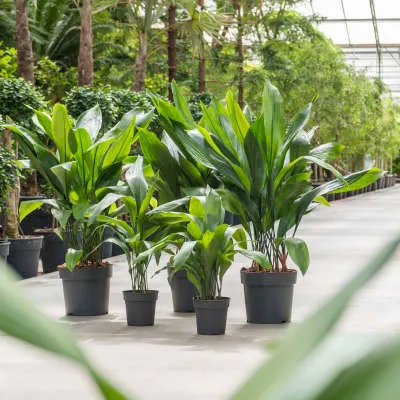
A strong plant that grows precisely in dark corners, that is the Aspidistra elatior. Originally, the plant grows as a ground cover in Japanese and Taiwanese forests, i.e. in the shade of other trees and plants. A strong shade plant, Aspidistra elatior was used as an interior plant as early as the nineteenth century, in rooms that were often poorly lit, draughty and dark. For instance, the plant is known to have stood in shoemakeries, butcher shops and restaurants. The Aspidistra has developed into a rock-solid plant that can survive on almost no light. Therefore, the plant cannot stand sunlight and a sunny location should definitely be avoided. As for further care, the Aspidistra is an easy plant that doesn't need too much water. Let the soil dry out a little before the next watering and make sure the plant does not stand with its roots in the water.
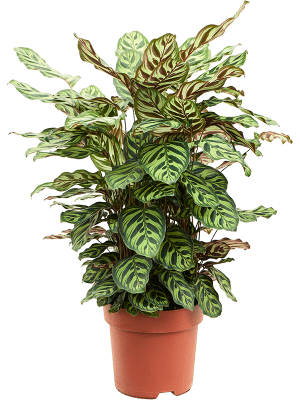
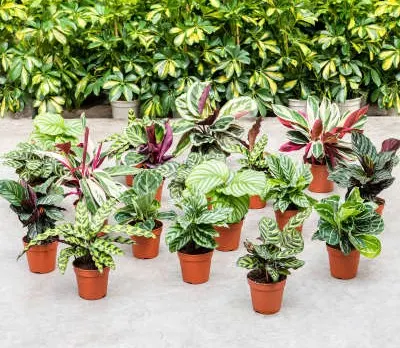
The Calathea is native to South America, where it grows in the jungles of the Amazon region. Because the plant does not grow very large, about one metre, the Calathea originally has a rather sheltered spot in the shade of higher plants and trees. As a result, the plant cannot cope well with sunlight and prefers a darker spot, such as near a north-facing window. The most important thing for good Calathea care is to create high humidity. Indeed, due to their tropical origins, these plants need a fairly warm environment with high humidity. Calatheas should therefore be watered regularly.
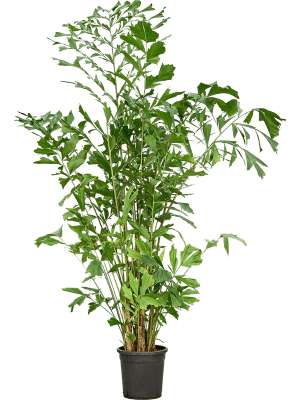
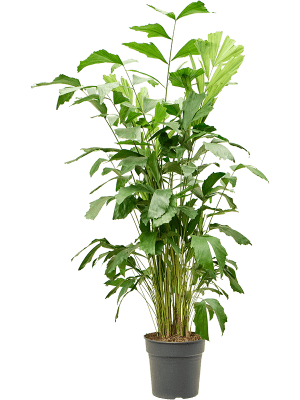
The Caryota mitis is also known as the Fish Tail Palm or the Fin Palm. The plant owes this name to its unique triangle-shaped leaves that split at the ends like a fish tail. The palm originally grows in Southeast Asia and despite this tropical environment with hot temperatures and high humidity, it does well as an interior plant. Sunlight results in brown spots on the leaves and a pale appearance in Caryota mitis. The right position for this palm is therefore not in a light environment, but rather more in the shade. In a shady spot, spray the plant regularly so the leaves become clean and can absorb the incoming light better.
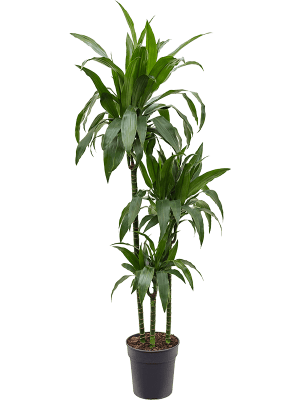
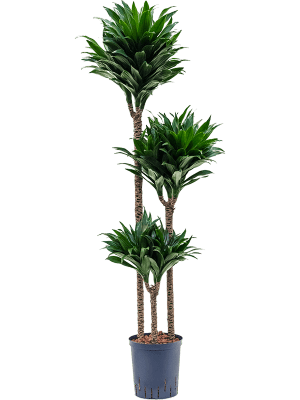
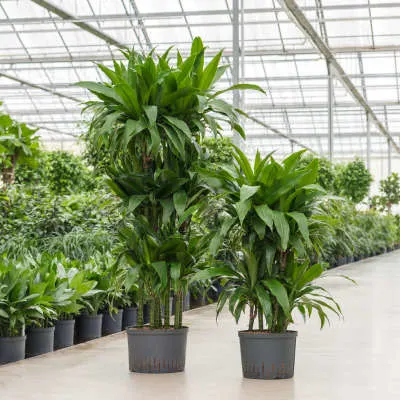
The Dracaena is a very popular interior plant. No wonder, as it adapts easily to its surroundings. Many species are therefore suitable for a darker location or a shady spot. In particular, Dracaenas with dark green leaves can be placed in a darker spot, such as fragrans 'Compacta' or fragrans 'Janet Craig'. Here the following applies: the lighter the leaves, the lighter the location and the darker the leaves, the darker the plant can be placed. Colourful Dracaena specimens, such as fragrans 'Lemon Lime', do need a few hours of sunlight a day. Caring for Dracaenas is quite easy; they only need water when the soil has completely dried out. As they store water in the stem, they can easily go a month without water.
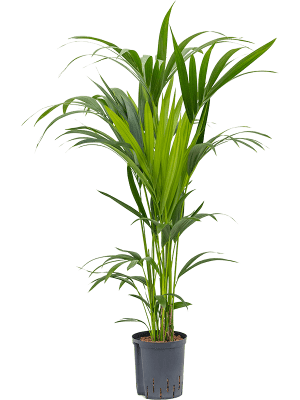
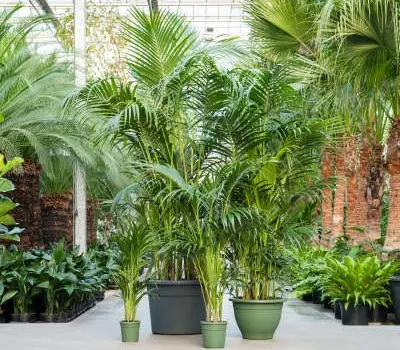
The Kentia (Howea) forsteriana gets its name from the island where the plant originally grows, namely Lord Howe, an island between Australia and New Zealand. On this island, the Kentia grows under the shade of larger palms, so the plant captures little direct sunlight. As a result, the palm is not suitable for a sunny spot, but prefers a darker spot in (semi-)shade. Place the plant near a north-facing window, for example, or a bit away from an east-facing window. If the Kentia catches a few rays of sun in the morning, that's fine. The Kentia howea likes slightly moist soil, and it is therefore important to always feel the potting soil when watering. Water evaporation is highly dependent on temperature. In summer the palm will therefore need more water than in winter.
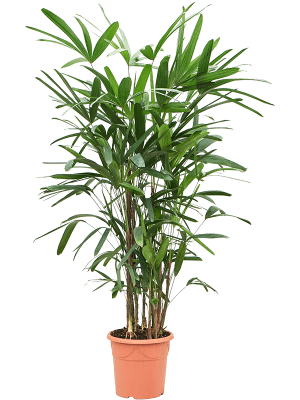
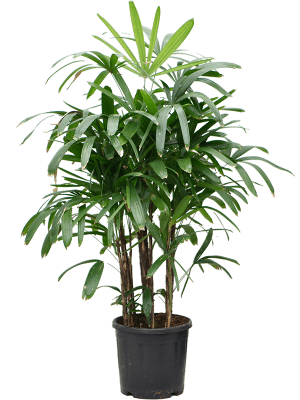
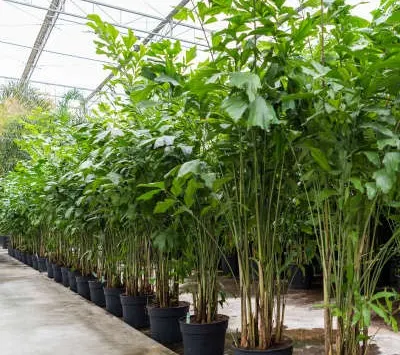
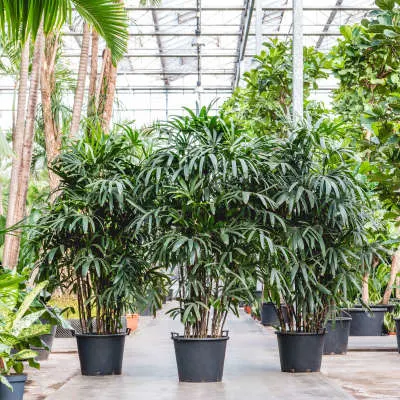
The Rhapis excelsa is a true shade plant and therefore very popular in office buildings. Because the Rhapis palm originally grows in the shade of surrounding trees and plants, it is accustomed to very little sunlight. The plant compensates for this by producing lots of chlorophyll: the more chlorophyll, the more sunlight it stores. This is then converted into energy for the plant. Because the plant is so used to shade, the Rhapis palm can stand darker than most plants. When deciding on its location, it is important to ensure that no direct sunlight falls on its leaves. Indirect light is however necessary for the plant's growth. Place the palm up to 5 metres from an east or west-facing window and up to 7 metres from a south-facing window. The Rhapis will tell you when the location is too light: its leaves will turn yellow. If no new leaves are produced, the palm is in a too dark location.
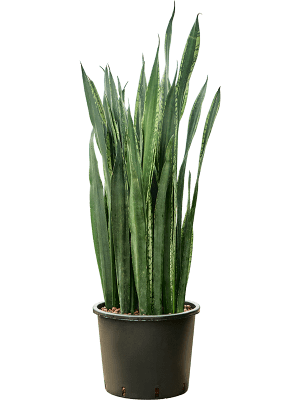
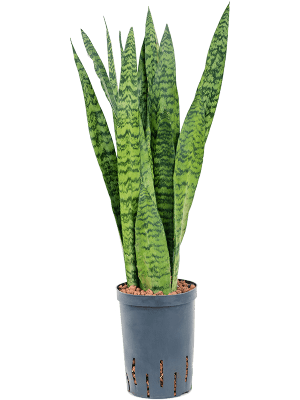
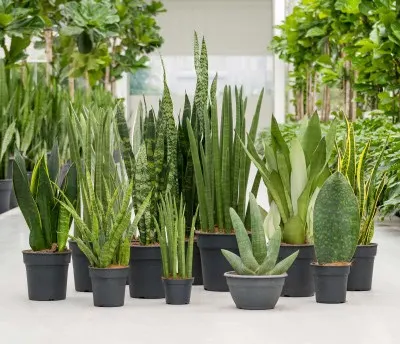
The Sansevieria, colloquially known as Woman's tongue or Snake plant, is an easy to care for plant. Almost all Sansevieria species adapt to their environment without any problems. Unlike many of the plants in this blog, the Sansevieria is actually originally accustomed to enormous heat and drought. In fact, the plant originally grows in the deserts of West Africa, where it survived with little water. As a result, the Sansevieria has evolved into a rock-solid plant that has become a popular office plant over the years. Sansevierias need little water and can be in very light and dark places. The plant needs less water if it is further away from the window.
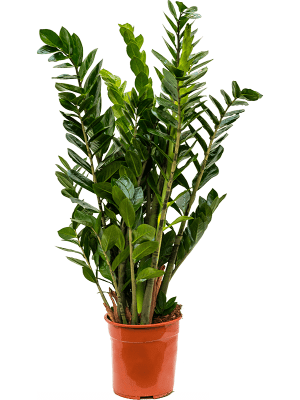
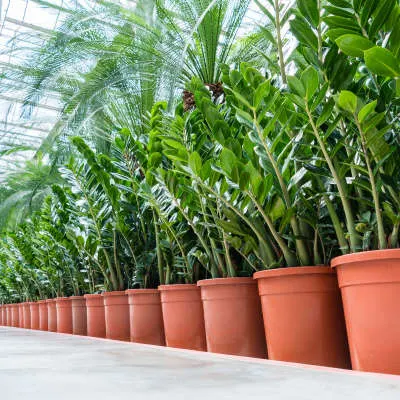
Most commonly, the Zamioculcas zamiifolia is called the ZZ plant. Originally, the plant comes from eastern Africa. The ZZ plant easily adapts to different locations, and has thus gained much popularity. The plant is also called the 'Eternity plant', a plant that could live forever because it is so strong. With a north-facing window, the Zamioculcas can be placed directly in front of the window. With an east- or west-facing window, it is better to place the plant a few metres away from the window. If the plant is placed in a spot that is too bright, the leaves will get black spots and the branches will droop. In that case, place the plant a little further away from the window. A special feature of this ZZ plant is that it can go up to 4 months without water, as water is stored in its leaves, stems and roots. However, this is not advisable for conducive plant growth, but it indicates that this plant does not need water very often. It is best to water the plant when the soil has completely dried out.
| Phone NL | +31 885 014 000 |
|---|---|
| Phone NGC | +31 885 014 014 |
| Phone FR | +33 (0)130 760 344 |